
HV and EHV Cable Thermal Ratings
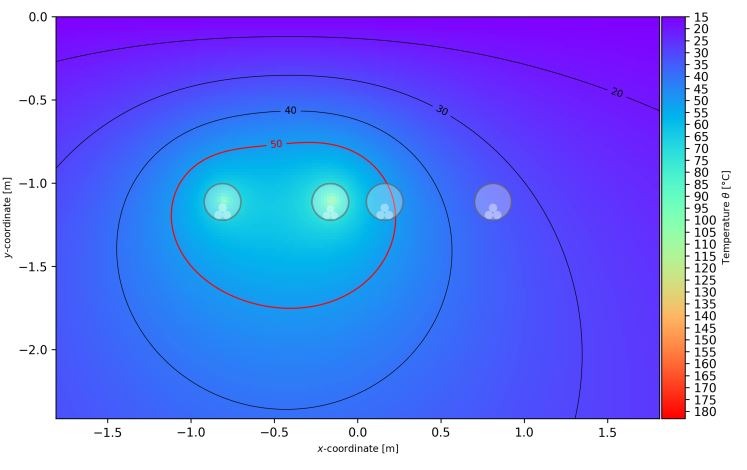
Cable thermal design ensures that high-voltage (HV) and extra-high-voltage (EHV) cables operate safely without overheating under expected load conditions. It involves calculating the maximum current a cable can carry while maintaining temperature limits set by standards.
Our Approach:
Use IEC 60287 and IEC 60853 calculation methods.
Model soil thermal resistivity, cable grouping, ducts, and backfill materials.
Consider transient conditions and emergency ratings.
Provide detailed reports with thermal curves and compliance checks.
Benefits:
Rail electrification projects.
Utility transmission and distribution networks.
Data centers and renewable energy connections.
Why It Matters:
Prevents cable insulation damage and premature failure.
Ensures compliance with IEC standards (IEC 60287 for steady-state, IEC 60853 for cyclic loads).
Optimizes cable sizing and installation for cost efficiency.
Applications:
Accurate ampacity ratings for HV/EHV cables.
Reduced risk of thermal bottlenecks in critical infrastructure.
Cost-effective design that avoids oversizing